
NTSB's All-Time NBA Team's Home Arena
Madison Square Garden has lived many lives, but its mythology has only grown with each incarnation. The current Garden—opened in 1968 atop Penn Station—stands as the fourth venue to carry the name, inheriting a legacy that stretches back to the 19th century and threads through the very identity of New York sports and entertainment. It has hosted some of basketball’s most iconic moments, from Willis Reed’s tunnel walk to Reggie Miller’s silencing flurries to MJ's double nickel, becoming a proving ground where legends are expected to rise to the occasion.
Beyond the Knicks, MSG has been home to heavyweight title fights, unforgettable concerts, political conventions, and cultural touchstones that cemented its reputation as “The World’s Most Famous Arena.” Its tight sightlines, roaring crowds, and Broadway‑stage lighting give every game a sense of theater, making it a natural home for an all‑time team built on greatness and spectacle.
Memorabilia

Julius Erving Topps 1976 Card #1

Julius Erving Topps 1978 Card #130

Larry Bird Topps 1981 Card #4

Larry Bird Topps 1992 Card #1

Sports Illustrated, March 3, 1986
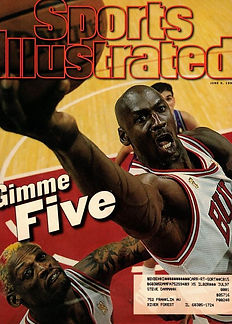

Sports Illustrated, June 9, 1997
Sports Illustrated, October 30, 1961
From Showtime To Air Time: Crafting My All-Time NBA Starting Five
By Rob Olds
The North Texas Sports Blog
March 15, 2026
The North Texas Sports Blog All‑Time NBA Team brings together a collection of giants who didn’t just dominate their eras—they reshaped the sport itself. At point guard stands Magic Johnson, the 6'9" visionary who turned basketball into theater and helped lift the league into the national spotlight . Flanking him is Michael Jordan, the global icon whose six titles and relentless will to win redefined greatness for every generation that followed. Larry Bird adds the cold‑blooded shot‑making and ruthless competitiveness that restored Boston’s dynasty and helped ignite the NBA’s golden age alongside Magic . Julius Erving brings the artistry—the soaring creativity that bridged the ABA and NBA and made above‑the‑rim basketball a cultural language of its own. Anchoring the paint is Wilt Chamberlain, the sport’s ultimate outlier, whose record‑shattering feats still read like folklore more than fact. Guiding them all is Phil Jackson, the Zen‑minded architect of modern dynasties, whose belief in harmony and precision turned talent into inevitability. Together, they form not just a starting five and a coach—but a summit of basketball history.
PG – Magic Johnson 6’9” 215lb Los Angeles Lakers
Magic Johnson revolutionized basketball as the 6'9" point guard who turned the fast break into an art form and led the Showtime Lakers to five NBA championships. He won three MVP awards and three Finals MVPs, cementing himself as the engine of one of the sport’s greatest dynasties. His rivalry with Larry Bird elevated the NBA from a struggling league into a national phenomenon and remains one of the defining chapters in sports history. Magic’s court vision, creativity, and unselfish brilliance reshaped how the game could be played and who could play point guard. His 1991 HIV announcement shocked the world, but his return in the 1992 All‑Star Game and his leadership on the Dream Team transformed him into a global ambassador for the sport. Beyond basketball, Magic built a groundbreaking business empire and became one of the most influential figures in sports and American culture.
SG – Michael Jordan 6’6” 198lb Chicago Bulls
Michael Jordan dominated the NBA with an unmatched blend of skill, competitiveness, and charisma, leading the Chicago Bulls to six championships and redefining what greatness looked like in professional basketball. He won five MVP awards and six Finals MVPs, delivering iconic performances that became cultural touchstones as much as athletic achievements. Jordan’s relentless will to win—often described as the most ferocious competitive drive the sport has ever seen—turned every game, practice, and possession into a personal challenge. His global impact extended far beyond the court, transforming the NBA into an international phenomenon and elevating athlete branding through Air Jordan into a worldwide empire. After his first retirement and brief baseball stint, he returned to deliver a second three‑peat, cementing a legacy that feels almost mythological in hindsight. Even decades after his final game, Jordan remains the standard by which every superstar is measured, the definitive GOAT in basketball’s long and storied history.
SF – Larry Bird 6’9” 220lb Boston Celtics
Larry Bird became the face of the Boston Celtics in the 1980s, leading the franchise to three championships and restoring its place atop the NBA hierarchy. His unmatched shooting touch, preternatural court sense, and ruthless competitiveness made him one of the most complete forwards the game has ever seen. Bird won three straight MVP awards from 1984–86, a feat that underscored both his individual brilliance and his command of the league during its golden era. His rivalry with Magic Johnson not only elevated both players but helped transform the NBA into a national obsession. Despite chronic back issues later in his career, Bird’s toughness and basketball IQ allowed him to remain elite until the day he retired. His legacy endures as the ultimate blend of skill, swagger, and competitive fire—a player who made winning feel inevitable.
SF – Julius Erving 6’7” 210lb Philadelphia 76ers
Julius Erving transformed professional basketball with his soaring athleticism, creative flair, and unmistakable elegance, becoming the bridge between the ABA’s free‑flowing artistry and the NBA’s rising global stage. He dominated the ABA with three MVP awards and two championships before joining the Philadelphia 76ers, where his leadership and star power helped elevate the franchise into a perennial contender. Dr. J’s 1983 championship run, capped by a sweep of the Lakers, cemented his legacy as one of the game’s most complete and respected champions. His iconic above‑the‑rim plays—the baseline reverse, the free‑throw‑line dunk, the floating layup around Kareem—reshaped the imagination of an entire generation of players and fans. Beyond the highlights, Erving carried himself with a professionalism and dignity that made him one of the sport’s most admired ambassadors. His legacy endures as the original aerial superstar, the man who made basketball look like poetry in motion.
C – Wilt Chamberlain 7’1” 275lb Philadelphia Warriors/Los Angeles Lakers
Wilt Chamberlain redefined the limits of athletic possibility, dominating the NBA with a combination of size, strength, and agility that made him the most statistically overwhelming player in basketball history. He set records that still feel untouchable—most famously his 100‑point game and a season averaging 50.4 points and 25.7 rebounds—numbers that read like tall tales but remain etched in the official ledger. Despite the perception that he was merely bigger than everyone else, Wilt was a remarkably skilled and versatile athlete, excelling as a scorer, rebounder, passer, and defensive anchor. His rivalry with Bill Russell became the league’s foundational epic, contrasting Wilt’s individual brilliance with Russell’s team‑centric dynasty. Chamberlain eventually silenced critics by reinventing himself as a defensive and playmaking force, leading the 1972 Lakers to a then‑record 69 wins and an NBA championship. His legacy stands as the sport’s ultimate outlier—a singular figure whose feats remain so staggering that they still challenge the imagination.
Head Coach – Phil Jackson Chicago Bulls/Los Angeles Lakers
Phil Jackson became the most successful coach in NBA history by blending innovative strategy, psychological insight, and a deep belief in team harmony. He won 11 championships as a head coach—six with the Chicago Bulls and five with the Los Angeles Lakers—crafting dynasties built around superstars while elevating the players around them. Jackson’s implementation of the triangle offense created a fluid, read‑and‑react system that maximized spacing, trust, and unselfish play. His calm, Zen‑inspired leadership style allowed him to manage enormous personalities and pressure with a rare steadiness that translated directly into winning. Before his coaching fame, Jackson carved out a tough, intelligent playing career, winning two titles with the New York Knicks and laying the foundation for his future philosophies. His legacy endures as the ultimate architect of championship basketball—the coach who turned talent into inevitability.

Phil Jackson Topps 1972 Card #32


Michael Jordan: The Life by Roland Lazenby

Wilt Chamberlain: A View From Above

Sports Illustrated: January 14, 1974

Sports Illustrated: November 9, 1981

Sports Illustrated: May 31, 1982

PSA slabbed 8x10 photo autographed by Wilt. Lew Alcindor and Jerry West are also in the photo.

Tall Men, Short Shorts: The 1969 NBA Finals - Wilt, Russ, Lakers, Celtics, and a Very Young Sports Reporter by Leigh Montville

Sacred Hoops: Spiritual Lessons of A Hardwood Warrior by Phil Jackson

Rare Air: Michael Jordan

Wish It Lasted Forever: Life With the Larry Bird Celtics by Dan Shaughnessy

Michael Jordan 1993 Topps Archives Card #52
Top 20 Accomplishments/Facts of the NTSB All-Time NBA Team
-
Magic Johnson revolutionized the point guard position, becoming the 6'9" maestro who “turned the fast break into an art form.”
-
Michael Jordan redefined NBA greatness, leading the Bulls to six championships and becoming “the definitive GOAT.”
-
Larry Bird won three straight MVP awards (1984–86), asserting total command over the league during its golden era.
-
Julius Erving bridged the ABA and NBA, bringing “soaring athleticism and unmistakable elegance” to the modern game.
-
Wilt Chamberlain set statistical records that still defy belief, including his 100‑point game and 1961-62 season averaging 50.4 points and 25.7 rebounds.
-
Phil Jackson became the most successful coach in NBA history, winning 11 championships as a head coach.
-
Magic and Bird’s rivalry transformed the NBA, lifting the league from instability into a national obsession.
-
Jordan won six Finals MVPs, delivering iconic performances that became “cultural touchstones.”
-
Dr. J dominated the ABA with three MVPs and two championships, then elevated the 76ers into a perennial contender.
-
Wilt reinvented himself as a defensive and playmaking force, leading the 1972 Lakers to a then‑record 69 wins.
-
Bird restored the Celtics’ dynasty, returning the franchise to championship prominence.
-
Jordan’s global impact reshaped athlete branding, turning Air Jordan into a worldwide empire.
-
Magic became a global ambassador for the sport, especially after his 1992 All‑Star return and Dream Team leadership.
-
Phil Jackson implemented the triangle offense, creating a system built on spacing, trust, and unselfish play.
-
Dr. J delivered some of the most iconic plays in basketball history, including the baseline reverse and free‑throw‑line dunk.
-
Jordan completed two separate three‑peats, a feat unmatched in modern basketball.
-
Bird’s toughness and basketball IQ kept him elite despite chronic back issues, showcasing his legendary competitive fire.
-
Wilt’s rivalry with Bill Russell became the league’s foundational epic, contrasting individual brilliance with dynasty‑building.
-
Magic led the Showtime Lakers to five championships, serving as the engine of one of the sport’s greatest dynasties.
-
Phil Jackson mastered Zen‑inspired leadership, managing superstar egos with calm and psychological insight that translated directly into winning.

Sports Illustrated: March 9, 1981

Sports Illustrated: June 4, 1984

Sports Illustrated: June 15, 1998

Sports Illustrated: May 17, 1976

Sports Illustrated: March 21, 1988