
The Sweet Spot: Why 2025 Became My Year of Autographed Bats
I’ve been collecting vintage baseball cards and sports memorabilia since 2016, and over the years my collection has gotten to be pretty expansive—everything from 1909 T206 tobacco cards to full Topps sets from the late ’90s, plus signed baseballs, jerseys, photos, footballs, hockey pucks, lithographs, and a whole lineup of bobbleheads. But in early June, during a business trip to Kansas City, something happened that completely changed the direction of my collection.
My girlfriend, one of her colleagues, and I were visiting a friend of hers we hadn’t seen in a few years. He and his wife had us over for dinner. Chris—our host—is a huge sports fan and has built some pretty incredible relationships with athletes over the years. His brother was a long time strength and conditioning coach for the Tampa Bay Rays, and one of Chris’s favorite people on the planet is Hall of Famer Fred McGriff.
At some point that night, I started telling Chris about my love for baseball and the stuff I’ve collected. His eyes lit up, and before I knew it, he sprinted to the back of the house. He came back holding two items: a signed baseball and a signed bat. Both were autographed by George Brett. He said I could have one but not both. I’ve got plenty of signed baseballs, but I’d never owned a bat. And honestly, it took me about five seconds to make my choice. He said he would ship the bat the following week and he would let me know when it was on the way.
When the bat arrived, I felt like a little kid again. Adding something totally new to my collection—especially something signed by George Brett, one of the greatest third basemen ever and one of my longtime favorites—felt special. I put it in a dark wood‑stained display case on my entertainment center, right under the TV in my media room. Picking that bat turned out to be one of the best collecting decisions I’ve ever made. It reminded me why collecting feels like a living, breathing part of being a baseball fan.
And it didn’t stop there. Since the signed Brett bat arrived from Chris last June, I’ve added nine more. Just like the rest of my collection, the bats I’ve picked up focus on Hall of Famers. Out of the ten I now have, eight are signed by players already in Cooperstown. The lone exceptions are Steve Garvey and Dale Murphy—who, if you ask me, both deserve to be there.
Here are photos of each of the nine bats in my collection and a career summary of each player.

George Brett
George Brett spent his entire 21-year career (1973-1993) with the Kansas City Royals and became one of the greatest hitters in baseball history. He amassed 3,154 hits, the second-most ever by a third baseman, and is one of only five players to finish with 3,000 hits, 300 home runs, and a .300 average. Brett won three batting titles in three different decades, the only player in MLB history to do so. His remarkable .390 average in 1980 earned him the American League MVP and nearly made him the first .400 hitter since Ted Williams (1941). He helped lead the Royals to the 1985 World Series championship, earning ALCS MVP honors along the way. In 1999, he was inducted into the National Baseball Hall of Fame on the first ballot with 98.2% of the vote.

Reggie Jackson
Reggie Jackson carved out one of the most iconic careers in baseball history, earning the nickname “Mr. October’ for his extraordinary postseason performances. Over 21 seasons (1967-1987), he hit 563 home runs, won five World Series championships, and appeared in 14 All-Star games. Jackson won the 1973 American League MVP Award and added two World Series MVPs, including his legendary three-homer performance in Game 6 of the 1977 World Series (October 18, 1977). He led the league in home runs four times and finished with 1,702 RBI and 2,584 hits, cementing his status of one of the most feared power hitters of his era. His postseason heroics helped the Athletics and Yankees dominate the 1970s, contributing to multiple pennants and titles. In 1993, he was inducted in the National Baseball Hall of Fame on the first ballot with 93.6% of the vote.

Johnny Bench
Johnny Bench stands as one of the most complete and influential catchers in baseball history, redefining the position with a blend of power, defense, and leadership. Over a 17-year career (1967-1983), spent entirely with the Cincinnati Reds, he earned 14 All-Star selections, 10 Gold Gloves, and won two National League MVP Awards. Bench anchored the Big Red Machine of the 1970s, helping lead Cincinnati to six division titles, four pennants, and two World Series championships, including a 1976 World Series MVP performance. He hit 389 home runs and led the league twice in homers and three times in RBI, retiring with the most home runs ever by a catcher at the time. His defensive excellence—highlighted by a powerful, accurate arm and unmatched ability to handle pitching staffs—set a new standard for the position. In 1989, he was inducted into the National Baseball Hall of Fame on the first ballot with 96.4% of the vote.

Pete Rose
Pete Rose built a career defined by unmatched durability, relentless competitiveness, and a hitting resume that stands alone in baseball history. Over 24 seasons (1963-1986), he collected 4,256 hits, the most in Major League Baseball, along with 3,215 singles, 746 doubles, and 15,980 plate appearances, all all-time records. Rose won three World Series championships, including a 1975 World Series MVP, and played a central role in the Big Red Machine’s dominance of the 1970s. He earned 17 All-Star selections at an unprecedented five different positions, showcasing his versatility and team-first mentality. His accolades also include the 1973 National League MVP Award, two Gold Gloves, and a pair of batting titles. Despite his lifetime ban from baseball, his on-field accomplishments remain some of the most significant in the sport’s history.

Dave Parker
Dave Parker, known as “The Cobra,” built a powerhouse 19-year career (1973-1991) defined by elite hitting, intimidating presence, and standout defense. He collected 2,172 hits, 339 home runs, and 1,493 RBI while batting .290 over his career. Parker won the 1978 National League MVP, captured two batting titles (1977-78), and earned seven All-Star selections along with three Gold Gloves for his exceptional arm and outfield play. He played key roles on two World Series champions, winning with the 1979 Pirates and 1989 Athletics. At his peak, he was one of baseball’s most feared hitters, even becoming the first American athlete to average $1 million per year under his 1979 contract. In 2025, Parker was elected to the National Baseball Hall of Fame by the Classic Baseball Era Committee, cementing his legacy as one of the great all-around players of his era.

Mike Schmidt
Mike Schmidt built one of the greatest resumes in baseball history, combining elite power, Gold Glove defense, and consistent excellence over 18 seasons (1972-1989) with the Philadelphia Phillies. He hit 548 home runs and drive in 1,595 runs, leading the National League in homers eight times and RBI four times. Schmidt won three NL MVP Awards (1980, 1981, 1986), the most by any third baseman, and added six Silver Sluggers to cement his status as the premier power hitter at his position. Defensively, he captured 10 Gold Gloves, showcasing exceptional range, arm strength, and reliability at third base. He helped lead the Phillies to the 1980 World Series championship, earning World Series MVP honors for his performance. In 1995, he was inducted into the National Baseball Hall of Fame on the first ballot with 96.5% of the vote, widely regarded as the greatest third baseman of all-time.

Dale Murphy
Dale Murphy put together one of the most impressive all-around careers of the 1980s, becoming the face of the Atlanta Braves and one of the decade’s defining stars. He won back-to-back National League MVP Awards in 1982 and 1983, a rare achievement matched by only a handful of players in history. Murphy earned seven All-Star selections, Five Gold Gloves, and four Silver Sluggers, showcasing his blend of power, speed, and elite defense in center field. He twice led the National League in both home runs and RBI, finishing his career with 398 homers, 2,111 hits, and 1,266 RBI. Known for his durability, he played in 740 consecutive games, then the sixth longest streak in NL history. Although he played much of his career on struggling Braves teams, his excellence, leadership, and sportsmanship made him one of the most respected players of his era, and his No. 3 was retired by Atlanta in 1994.
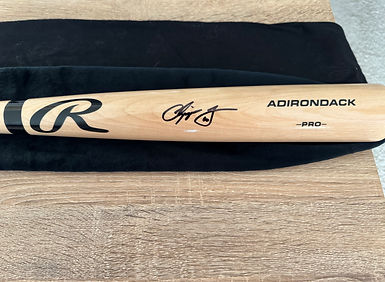
Chipper Jones
Chipper Jones crafted one of the most complete and consistent careers of his generation, becoming the premier position player on the dominant Atlanta Braves teams of the 1990s and 2000s. He spent all 19 seasons (1993-2012) of his career with Atlanta and finished with a .303 average, 2,726 hits, 468 home runs, and 1,623 RBI. Jones earned eight All-Star selections, won the 1999 National League MVP Award, and added two Silver Sluggers while anchoring the heart of the Braves’ lineup. He helped lead Atlanta to the 1995 World Series championship, contributing to the franchise’s run of 11 straight postseason appearances. In 2008, at age 36, he won the National League batting title with a .364 average, becoming the only switch hitter in MLB history with a .300 average and 300+ home runs. His remarkable blend of power, patience, and longevity earned him induction into the National Baseball Hall of Fame in 2018, receiving 97.2% of the vote on the first ballot.

Frank Thomas
Frank Thomas, known as “The Big Hurt,” established himself as one of the most dominant right-handed hitters in baseball history, combining elite power with exceptional plate discipline. Over his 19-year career (1990-2008), he hit 521 home runs, drive in 1,704 RBI, and posted a .301 batting average, making him one of the most complete offensive forces of the modern era. Thomas won back-to-back American League MVP Awards (1993-1994), becoming only the sixth AL player ever to accomplish that feat. He also earned five All-Star selections, four Silver Sluggers, and captured the 1997 AL batting title with a .347 average. His unmatched streak of seven straight seasons with at least a .300 average, 20 homers, 100 RBI, 100 runs, and 100 walks remains unique in MLB history. In 2014, he was inducted into the National Baseball Hall of Fame on the first ballot, cementing his legacy as one of the greatest hitters of his generation.

Steve Garvey
Steve Garvey became one of the most consistent and recognizable stars of the 1970s and early 1980s, anchoring the Los Angeles Dodgers’ infield with durability, clutch hitting, and leadership. He earned 10 All‑Star selections, won the 1974 National League MVP, and captured four Gold Gloves at first base while helping the Dodgers reach four World Series. Garvey was known for his remarkable reliability, setting the NL record with 1,207 consecutive games played, a testament to his conditioning and toughness. In postseason play, he delivered some of his greatest moments, earning two NLCS MVP awards and hitting .338 across 11 playoff series. After joining the San Diego Padres, he provided veteran stability and famously hit the decisive homer in the 1984 NLCS that sent the franchise to its first World Series. Garvey finished his 19‑year career with a .294 average, over 2,500 hits, and a legacy as one of the era’s most durable and productive first basemen.